

Enterprise AI
Leadership, architecture and delivery at organisational scale.
Does every AI workload really need the cloud?
I experiment with real systems to find what should run Local, Hybrid or Cloud, proving trade-offs with reproducible benchmarks and code.
Start with the workload, not the model. Compare what Local, Hybrid and Cloud make possible—and the constraints each one introduces.
THREE WAYS TO RUN AI
Swipe to compare
Run AI close to the data. Keep sensitive processing on the device and own the runtime end to end.
THE TRADE-OFFS
Sensitive workloads, offline reliability and predictable local interactions.
Keep critical steps local, then route selected tasks to remote capacity when the workload calls for it.
THE TRADE-OFFS
Mixed workloads with different privacy, capability and capacity needs.
Use hosted models and managed infrastructure when reach, model strength and variable demand take priority.
THE TRADE-OFFS
High-capability workloads, burst demand and centralized operations.
01 / 03
Choosing where AI should run is the first step. Making that runtime reliable is the next.
When Local or Hybrid makes sense, I build reusable infrastructure for reasoning, mobile inference, repeated decisions and private speech.
Two platforms. Dedicated runtimes.

Local AI runtime control plane
Run and manage local AI models behind one stable application-facing API.
Shared Android local-AI control plane
Run local GGUF models once and expose governed on-device inference to multiple apps.
Built for specific workloads
04 reusable systems02 execution environments02 specialized components
Each system solves a different execution problem. Real product integrations are shown in the following TEST stage.
Infrastructure only matters when real applications can depend on it. These products put privacy, usability and integration assumptions to the test.
REAL PRODUCTS · REAL CONSTRAINTS
Three applications, three different workload constraints.
Swipe to explore
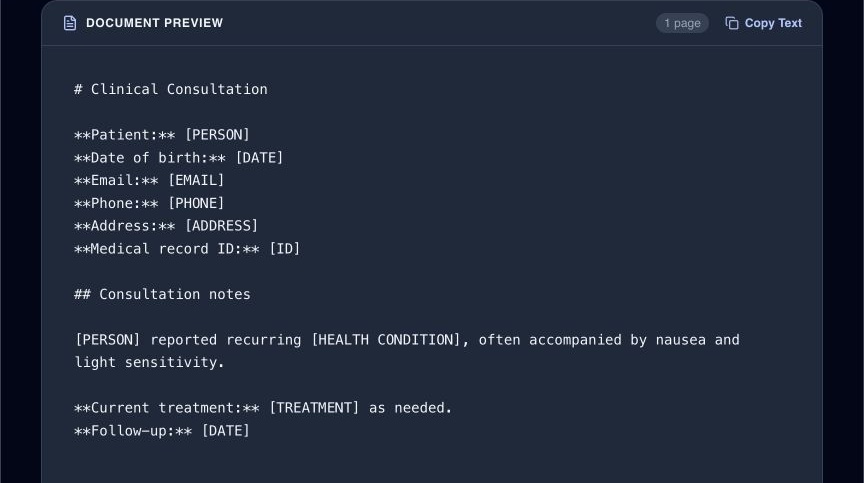
 RedactGuardWEB & DESKTOP · PII REDACTION
Can sensitive document processing stay local?
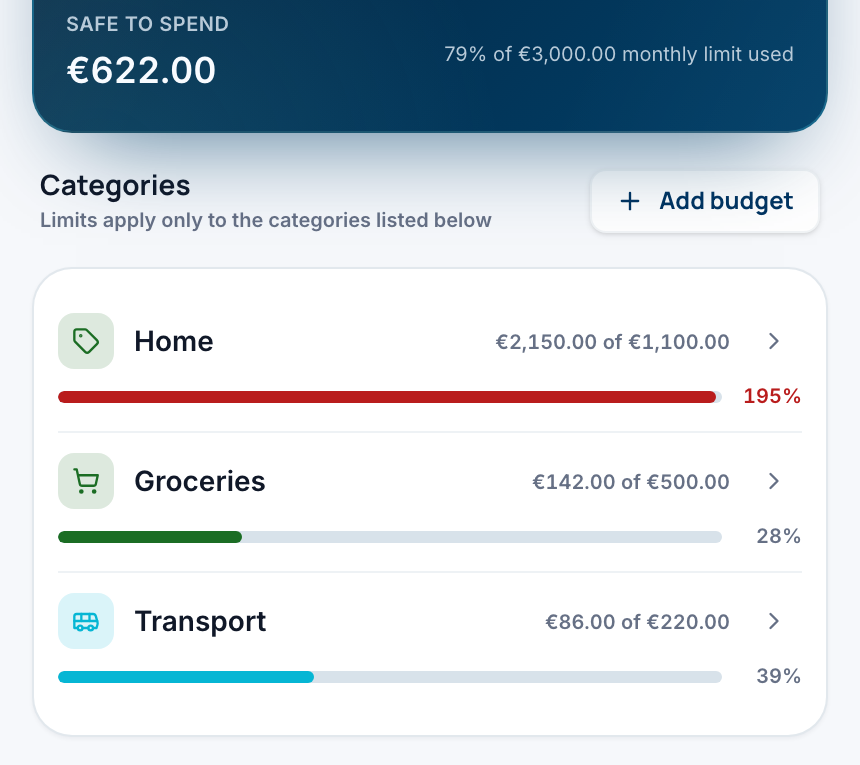
 Aura FinanceMOBILE · ON-DEVICE PARSING
Can personal transactions be categorized on-device?
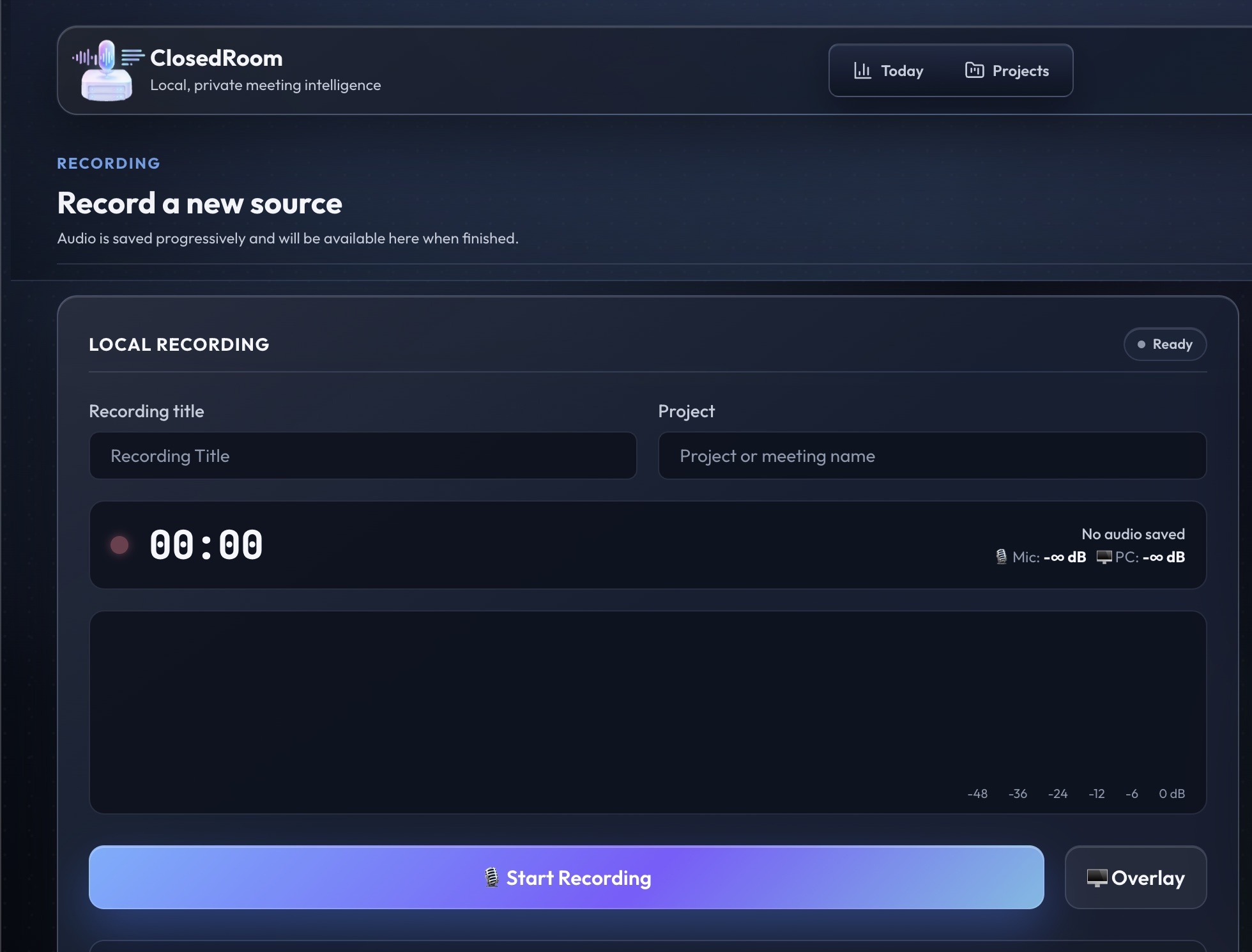
 ClosedRoomMACOS · MEETING INTELLIGENCE
Can meeting intelligence stay inside the room?
01 / 03
Real applications expose the limits. Measurement shows where to improve.
04 MEASURE
Reproducible benchmarks turn architecture choices into evidence: what works, how well, and at what cost.
Real runs exist outside the published repository snapshot. This view stays empty until a versioned evidence artifact is available.
Intent classification · comparing identical benchmark signatures
This is Model Capability Benchmark evidence, not a result from the separate Jev vs LLM suite.
Runs with the same request count are shown together; identical samples and configurations have not been independently verified.
One run · same benchmark workload
System recall includes inference failures. The p95 shown here was observed during quality runs, not a repeated latency benchmark.
The test dataset is published, but no measured model results are available for this dataset yet.
Swipe across the chart for full-size labels
The quality–latency comparison requires at least two models measured in the same complete run.
Individual dataset scores, never a global rating.
— means that this model/dataset has no published measurement, not 0% performance.
Run comparisons are exploratory. Healthcare and Ambiguous have distinct model cohorts; do not interpret their figures as a controlled leaderboard. Dataset gold spans have not been independently human-reviewed.
Two numbers that put the finding in context
Compare published scores. Local and API latency are not hardware-matched.
SWIPE TO COMPARE
Swipe across the chart to inspect all models
Aggregate quality is reported by the published Model Capability Benchmark. Latency is the reported median (p50); local and API runtimes have different execution environments.
These figures describe the published snapshot, not a controlled hardware-normalized leaderboard. Use the linked source for benchmark signatures, tasks and reproducibility details.
No fallback or invented performance values are shown.
Who I am
I lead enterprise AI systems and build AI on real devices to understand what should run Local, Hybrid or Cloud.

Leadership, architecture and delivery at organisational scale.
AI systems built and tested on Mac, Android and local infrastructure.
Open-source systems and technical writing through GitHub and stAI tuned.